
Regulation and Management of Cannabis Cultivation in the Gandaki Province of Nepal
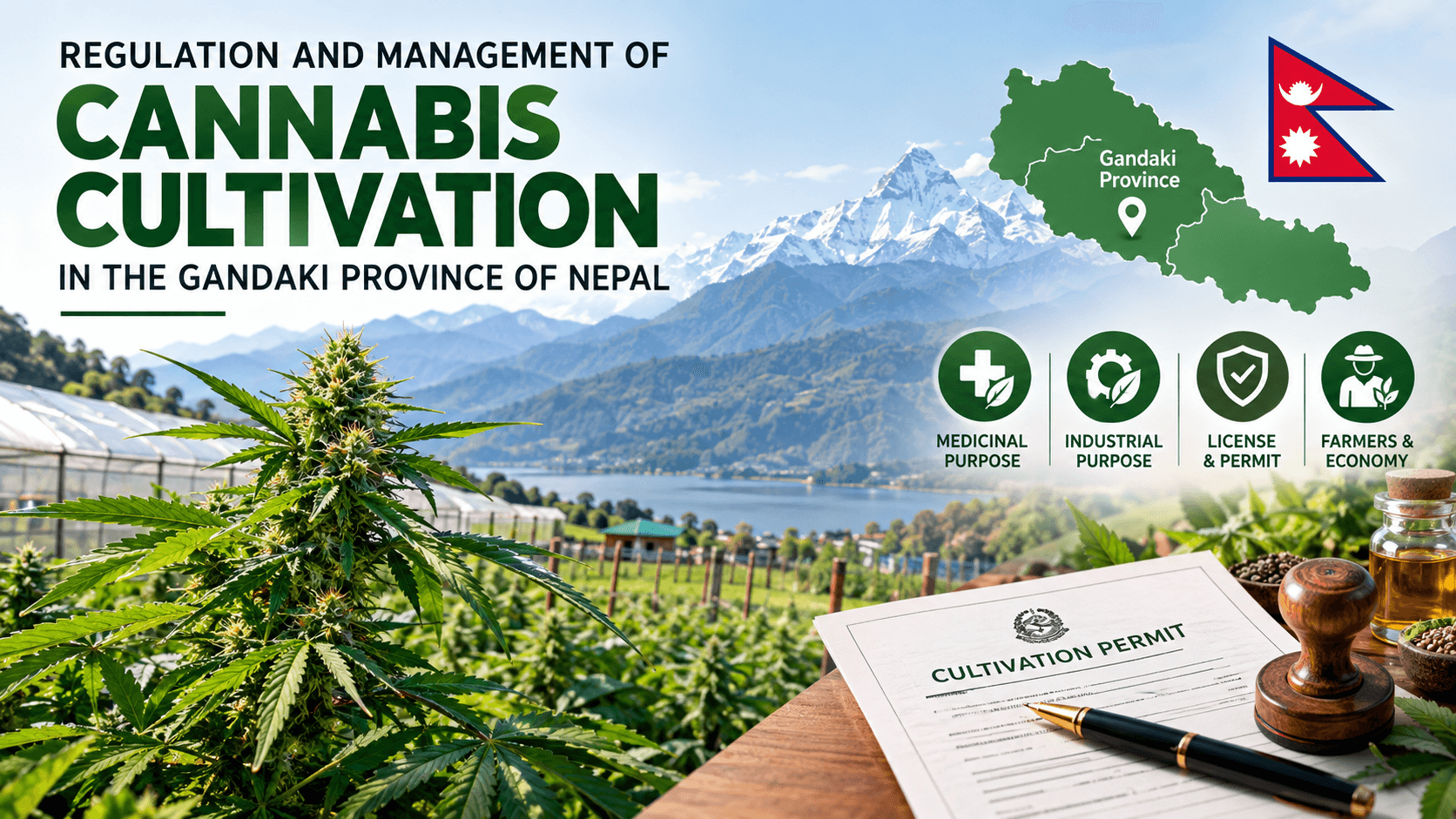
Cannabis has long been used in Nepal for traditional, medicinal, and cultural purposes. Its legal status changed, however, with the enactment of the Narcotic Drugs (Control) Act, 2033 (1976), which generally prohibited the cultivation, production, sale, distribution, possession, and consumption of cannabis as a narcotic drug. The Act allows limited use for medicinal, scientific, and research purposes, subject to government approval.
Discussion around reforming this approach gained momentum in 2020, when a bill was introduced in the Federal Parliament to permit regulated cannabis cultivation, particularly for medicinal use and export. This sparked broader debate on the potential medicinal, industrial, and economic benefits of cannabis, alongside recognition of the need to prevent misuse and illegal diversion.
Against this evolving legal and policy backdrop, the Gandaki Province Government enacted the Act Relating to the Regulation and Management of Cannabis Cultivation for Medicinal and Industrial Purposes, 2083. The Act establishes a controlled system for cultivating cannabis for specified medicinal and industrial purposes, built around licensing, government supervision, and compliance requirements.
This framework carries significance beyond regulatory policy — it has real implications for the people and economy of the Province. Regulated cultivation can create opportunities for farmers, generate employment and income, put suitable agricultural land to productive use, and support the development of medicinal and industrial products. At the same time, the Act ensures that these opportunities unfold under proper government oversight, minimizing the risk of misuse. In this sense, it represents a deliberate attempt to balance cannabis's economic and agricultural potential against the need for effective regulation and public protection.
Permitted Purposes of Cultivation
The law permits cultivation only when it is tied to an approved medicinal or industrial purpose:
Medicinal purpose — the use of cannabis or cannabis-derived substances for the diagnosis, treatment, prevention, cure, or alleviation of disease, as well as for pain relief, in humans, animals, or birds.
Industrial purpose — the use, processing, or production of industrial raw materials such as fiber, seeds, leaves, flowers, oil, stalks, roots, or other parts derived from cannabis, excluding cannabis resin (charas/hashish), which remains classified as a narcotic drug.
Determining Cultivation Areas
The provincial government may permit cultivation only in specific districts or local levels designated in the Provincial Gazette. Factors such as production potential, quality, safety, monitoring capacity, and food security must all be weighed in designating these areas.
A Permit Is Mandatory
Cultivation without a permit is prohibited. A person, firm, or institution granted permission may cultivate cannabis only within the approved area and only of the approved variety. For standard production, THC content must not exceed 0.3%, and THC testing is mandatory before harvesting, storage, and sale.
Some Major Steps involved in the Cultivation Permit are:
Step 1: Obtain Prior Approval | Before applying for the cultivation permit, the applicant must first apply to the designated Cannabis Regulation and Management Unit for prior consent. The application may require details such as:
The prior consent remains valid for one year. |
Step 2: Prepare the Required Security and Infrastructure | After receiving prior consent, the applicant must establish the required infrastructure at the proposed cultivation site. This includes appropriate:
|
Step 3: Apply for the Cultivation Permit | Once the required infrastructure is in place, the applicant can apply for the cultivation permit. The application must include relevant documents such as:
The prescribed fee must also be paid. |
Issuance of the Permit
The Unit examines the submitted documents. If necessary, it may ask the applicant for additional information within seven days. A designated inspector then conducts a site inspection. If the applicant satisfies the requirements, the permit is issued after payment of the prescribed fee.
Duty of a Permit Holder
A permit holder must continuously comply with the conditions of the permit. Maintaining the approved security and other infrastructure, not using or selling cannabis for purposes other than those approved and informing the police and the concerned unit if any damage or loss occurs are some of the key responsibilities a permit holder is bound to follow.
Permit Validity and Renewal
A cultivation permit is valid for five years. The permit holder must renew it before its expiry by paying the prescribed renewal fee.
Cancellation of Cultivation permit
A permit may be cancelled for reasons including:
violation of the law or permit conditions
failure to renew the permit
selling cannabis to another industry without the required approval
failure to establish the required infrastructure
failure to maintain the required records.
Generally, the permit holder must be given an opportunity to explain or defend themselves before cancellation. A person dissatisfied with the cancellation decision may file a complaint within 35 days.
Regulation of Harvesting
The permit holder must notify the concerned Unit before harvesting. The inspector will determine the harvesting date and attend the site to authorize the process. A memo of the harvest and quantity must be prepared in the presence of the concerned ward, the local monitoring committee and the police.
Transportation of Cannabis
Cannabis and cannabis-based materials must be transported only after being properly sealed. Normally, the seal cannot be broken for inspection. In special circumstances, inspection may be carried out only in the presence of the designated government or police representatives.
Offences and Penalties
The Act treats several activities as offences including cultivating cannabis without permission, cultivating on land different from the approved land or beyond the permitted area, illegal sale, failure to provide required records or information, transporting cannabis without the required permission or sealing and other acts contrary to the law.
Illegal cultivation or sale is subject to punishment under the prevailing narcotics law. Other violations may attract a fine ranging from NPR 50,000 to NPR 500,000.
Right to Appeal
A person may appeal against fines imposed for certain violations such as including failure to maintain required records, transporting cannabis without permission or sealing, and other acts contrary to the rules made under the Act.
Such an appeal may be filed before the District Court within 35 days.
Tax on Cannabis Cultivation
Income generated from cannabis cultivation is subject to agricultural tax income under the prevailing economic and tax laws.
Written by Summit Legal Advisory
Legal expert and contributing analyst at Summit Legal Advisory.